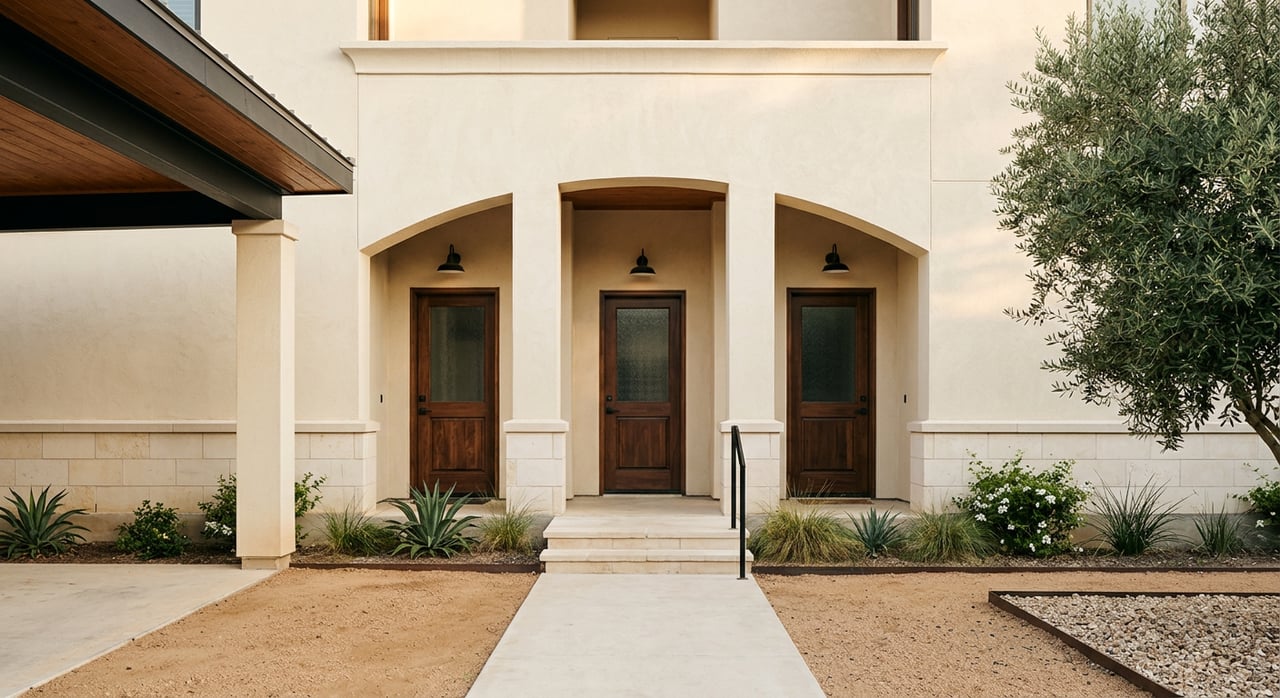
Thinking about buying a duplex, triplex, or fourplex in San Antonio but not sure where to start? You are not alone. With shifting rents, more new apartments delivered in recent years, and rising expenses, it can feel tricky to pin down value. This guide gives you the current market picture, realistic price and return ranges, a clear underwriting checklist, neighborhood strategy tips, and the key financing and tax points you should know. Let’s dive in.
San Antonio market at a glance
San Antonio is a large Sun Belt metro with diversified demand drivers that support long-term rental need, including health care, education, government, tourism, and a significant military presence. Recent industry data shows average effective apartment rent near $1,192 entering April 2025, with rent declines from 2023 slowing into 2025. Vacancy rose during the 2023 to 2024 delivery wave, reaching about 7.8 percent by April 2025, then began to stabilize as new completions slowed in 2025. You can review these metro fundamentals in IPA’s 2Q 2025 multifamily market report.
Where supply landed matters. The largest wave of new apartments concentrated in second-ring and outer suburban corridors, while core urban and first-ring submarkets saw less new supply. For small multifamily, that often means steadier demand and less pricing pressure in central areas compared to some outer submarkets.
Price and return benchmarks for 2 to 4 units
Prices vary widely by neighborhood, age, and unit mix. Across the metro you can find duplexes, triplexes, and fourplexes that range from the low $100,000s to above $700,000. Central and near-downtown fourplexes often fall in the $350,000 to $800,000 range, while many outlying duplexes show up near $200,000 to $400,000. Always confirm with current comps in the same micro-area and condition band.
On yields, institutional urban multifamily in late 2024 and 2025 averaged around the mid 6 percent cap rate. Smaller 2 to 4 unit deals, especially value-add or older Class B and C assets, often trade at higher caps, commonly mid 6s to high 7s depending on location and condition. Regional evidence and surveys support that range; use recent closed comps in your target zip code to set your specific hurdle, and see this regional cap rate evidence summary for context.
Two quick screening rules many investors use:
- GRM: 7 to 12, depending on condition and submarket.
- Target going-in cap: at least mid 6 percent for stabilized B or C deals in 2025 and 2026, with higher caps for heavier value-add or perceived risk.
Market-level price per unit climbed into 2021 and 2022, then pulled back and began to stabilize by mid 2025, with smaller Class B and C trades generally pricing below institutional assets. Check the same IPA report for broader pricing context.
How to underwrite a duplex, triplex, or fourplex
Start with a quick screen
Calculate GRM and a simple going-in cap rate using current rents and your view of stabilized rents. If a property does not clear your GRM or cap thresholds, move on or negotiate price.
Verify income and lease terms
Request executed leases, addenda, security deposit records, and payment history. Confirm who pays which utilities and how the property is metered. Document any concessions or nonstandard terms that affect collections.
Check market rents with comps
Pull at least 3 to 5 comparable rentals per unit type in the same neighborhood. Use local MLS, apartment trackers, and recent listings. Adjust for unit size, parking, renovations, and included utilities.
Model vacancy and effective gross income
Plan for a higher-than-historic vacancy allowance while the market absorbs recent supply. A conservative starting point for San Antonio is 7 to 8 percent vacancy and concessions at the metro level, then refine if your submarket shows stronger demand. The IPA market report cited about 7.8 percent vacancy entering April 2025.
Build an operating expense budget
For small multifamily, a stabilized operating expense ratio of roughly 35 to 45 percent of effective gross income is a practical starting band. That should cover taxes, insurance, any owner-paid utilities, routine maintenance, turnover, management, and reserves. Review basic formulas and budgeting logic at Trinity Real Estate’s CRE formulas overview.
Key line items to include:
- Management: 6 to 10 percent of collected rents, with the higher end common for out-of-state or more hands-on assets.
- Property taxes: Bexar County combined rates depend on city, school district, and special districts. Many City of San Antonio plus San Antonio ISD parcels land roughly in the 2.3 to 2.6 percent range of assessed value. Confirm your parcel’s jurisdictions on the Bexar County tax page and budget increases after reassessment.
- Insurance: obtain quotes early and use conservative estimates, since premiums have risen in many markets.
Plan capital reserves
Set aside a replacement reserve for cyclical items like roofs, HVAC, paint, and appliances. A common starting range is $250 to $500 per unit per year, adjusted up for older systems or deferred maintenance.
Check NOI, cap rate, and sensitivity
Compute NOI as effective gross income minus operating expenses, excluding debt service. Compare the going-in cap to closed comps in the same submarket and to your target return. Run three cases: conservative, base, and upside, changing rents, vacancy, and maintenance assumptions to understand risk.
A simple numbers example
Consider a $500,000 fourplex with current scheduled rent of $4,400 per month. With an 8 percent vacancy and concessions allowance, effective gross income is about $48,576 per year. At a 42 percent operating expense ratio, expenses total about $20,379, which leaves roughly $28,197 in NOI. The going-in cap would be about 5.6 percent. If your minimum target cap is 6.5 percent on the same operations, price would need to be closer to $434,000, or you would need credible rent upside.
Neighborhood and tenant strategies
Focus on supply dynamics
Small multifamily tends to perform more predictably in areas with balanced new supply. Recent deliveries in San Antonio were most concentrated in outer corridors, while core and first-ring neighborhoods saw less new stock. In practical terms, central urban and first-ring areas can offer steadier occupancy and rent resilience, though often at lower initial cap rates. Review submarket supply notes in the IPA market report as you pick targets.
Understand likely tenant demand
- Military and military-affiliated renters are a steady presence across the metro because of Joint Base San Antonio. Learn more about the base’s scale and locations in this JBSA overview.
- Workforce households tied to health care, education, hospitality, and government support demand near the Medical Center, downtown, and key employment corridors.
- Students are a meaningful niche. The University of Texas at San Antonio profile shows sizable enrollment, which creates pockets of student-oriented demand near campuses. The right unit mix and management approach are important if you target this segment.
Financing your 2 to 4 unit deal
Financing for 1 to 4 units is often more flexible than 5-plus unit commercial loans. If you plan to live in one unit, FHA allows low down payment financing on 2 to 4 unit properties, subject to occupancy and loan limits. You can review program updates in the current HUD Mortgagee Letter. For non-owner-occupied purchases, expect conventional, DSCR, or portfolio products with typical down payments starting around 20 to 25 percent, and lender overlays that vary. Work with a local lender who handles 2 to 4 unit deals frequently.
Taxes, insurance, and operations to mind
Property taxes are often your largest single expense. Combined rates vary by parcel. Many City of San Antonio plus San Antonio ISD addresses land in the 2.3 to 2.6 percent range of assessed value, but you must confirm your property’s specific jurisdictions and exemptions on the Bexar County tax site. Insurance costs have risen in recent years across many markets, so get quotes early and budget conservatively. Management can be efficient in small multifamily compared with scattered single-family rentals, but you should still carry a realistic fee and plan for vacancy, turnover, and turn costs.
Quick offer checklist
Use this list before you write an offer on a duplex, triplex, or fourplex:
- Match the seller’s rent roll and deposits to leases and bank statements.
- Pull 3 to 5 nearby rent comps per unit type. Adjust for size, finishes, parking, and utility responsibilities.
- Confirm tax jurisdictions and total the combined rate using the Bexar County tax page.
- Order an insurance quote and a basic condition scope for roof, HVAC, electrical, plumbing, and structure.
- Verify metering and who pays each utility.
- Underwrite with 7 to 8 percent vacancy for a stress case and a 35 to 45 percent operating expense ratio, plus a realistic reserve plan.
- Validate likely loan products, down payment needs, and DSCR with at least two local lenders.
Work with a local advisor
Small multifamily is one of the most practical ways to build cash flow in San Antonio, but your outcome hinges on disciplined underwriting and micro-market insight. With 341-plus closed sales and more than $77.2 million in career volume, my practice pairs data-driven analysis with high-touch execution, from sourcing to negotiation to a clean close. If you want help finding, underwriting, and closing a San Antonio duplex, triplex, or fourplex, request a confidential consult with Trinie Johnson.
FAQs
Can I use FHA to buy a duplex in San Antonio?
- Yes. FHA allows financing for 2 to 4 unit properties if you occupy one unit and meet program limits and rules, which you can review in the current HUD Mortgagee Letter.
What cap rate should I expect on small multifamily in Bexar County?
- Institutional urban multifamily has averaged mid 6 percent caps recently, and many 2 to 4 unit deals trade at mid 6 to high 7 percent depending on location, condition, and value-add potential, per IPA’s market context.
What vacancy rate should I underwrite in San Antonio today?
- Start with 7 to 8 percent at the metro level to stress test, since vacancy was about 7.8 percent entering April 2025, then refine for your submarket using the IPA report.
How do Bexar County property taxes impact cash flow on 2 to 4 unit properties?
- Many City of San Antonio plus San Antonio ISD parcels land around 2.3 to 2.6 percent of assessed value, but you should confirm the exact rate and entities for your parcel on the Bexar County tax page.
Where are rents holding steadier within San Antonio?
- Core and first-ring submarkets saw less new supply than outer corridors, which has supported steadier fundamentals relative to some suburban areas, according to the IPA market report.